

An update on BTR rents at the end of Q2 FY26/27
Our last analysis looked at BTR rents in the build-up to the implementation of renters reform. We have continued tracking advertised rents to assess pricing behaviour as the market adjusts to the new legislation.
London
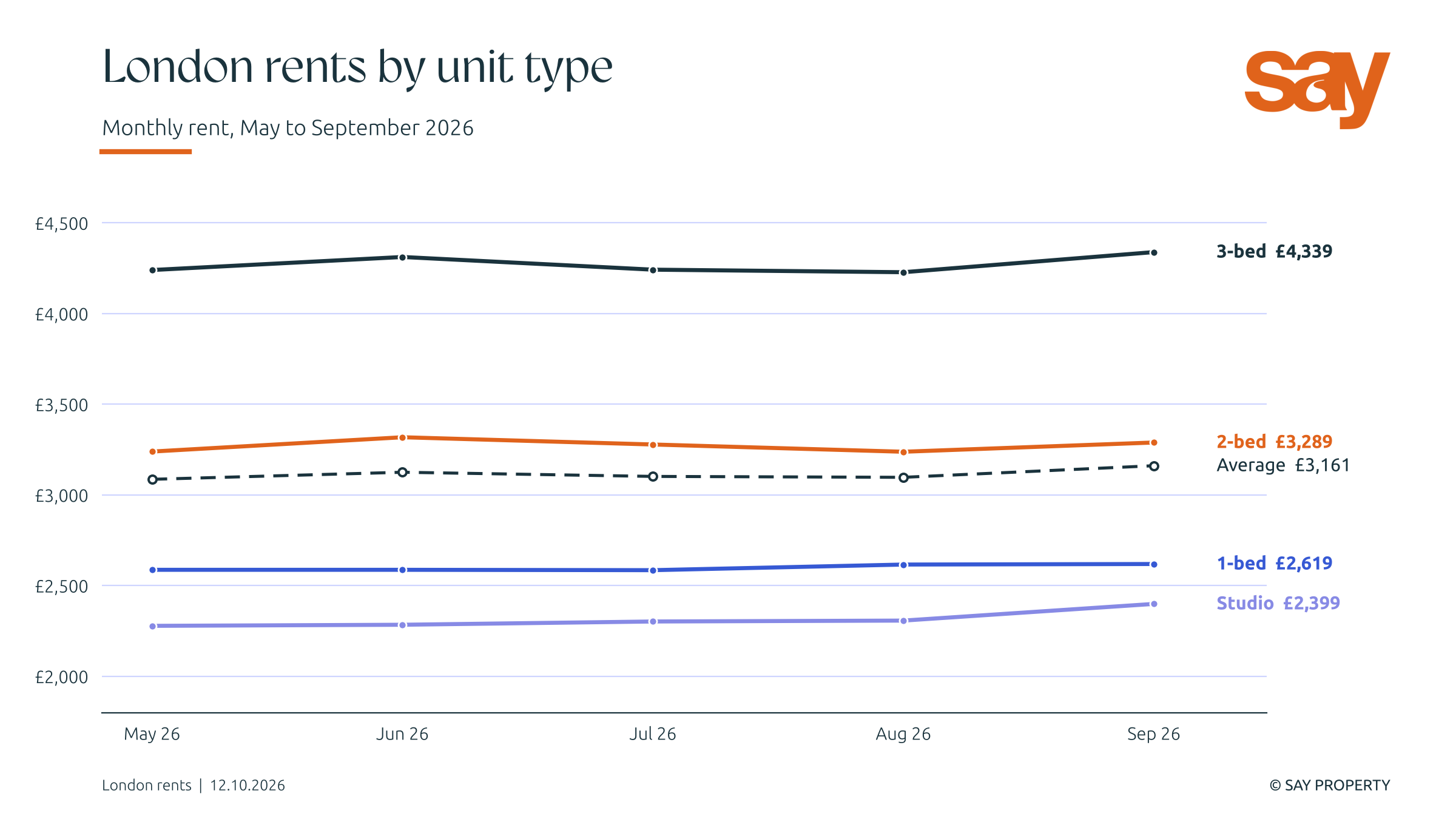
Since May, average advertised BTR rents across London have continued to rise, increasing from £3,086 pcm to £3,161 pcm in September (+2.4%, +£75). Whilst some fluctuations have been observed over the period, rents have generally followed an upward trajectory, albeit with varying levels of growth across individual unit types.
Studio rents have experienced the strongest growth, increasing by 5.3% (+£121) to £2,399, with much of this uplift occurring in September alone. By contrast, 1-bed rents have remained relatively stable, rising by just 1.2% (+£32) to £2,619.
Growth in 2-bed rents has been similarly modest (+1.5%), with rents peaking at £3,318 in June before easing and recovering slightly to £3,289 in September. Meanwhile, 3-bed rents have continued to demonstrate greater volatility, although they have increased by 2.3% (+£99) since May to £4,339.
Overall, the data points to continued rental growth across London's BTR market, although the pace of growth remains uneven. Studios have emerged as the strongest-performing unit type, whilst growth across 1-bed and 2-bed homes has been more subdued. The continued volatility within the larger unit types may reflect greater sensitivity to affordability and more variable demand at higher rental price points. Nevertheless, with rents increasing across all unit types since May, the findings suggest that operators have maintained a degree of pricing confidence despite the evolving regulatory environment.
Manchester
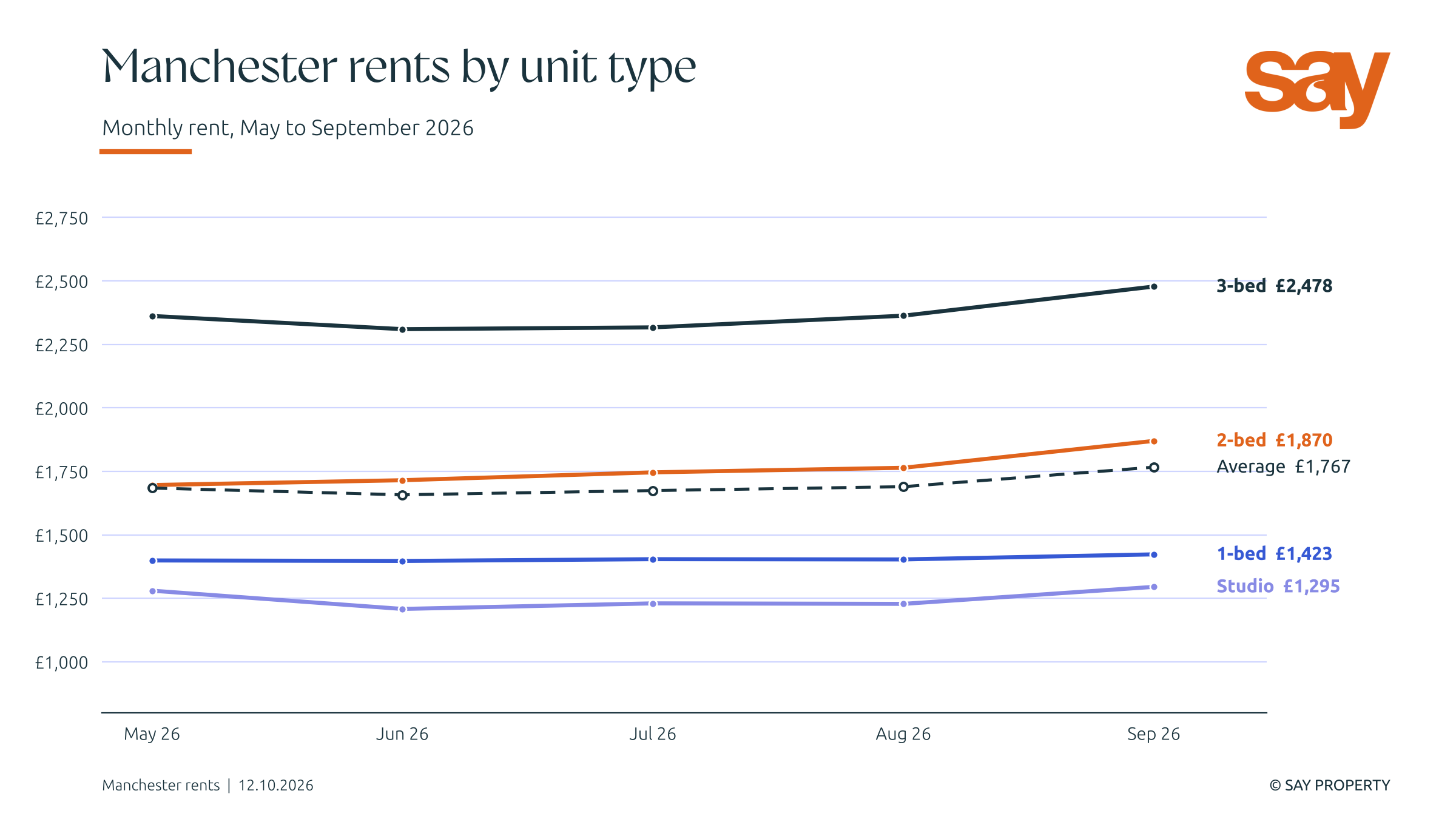
Since May, average advertised BTR rents across Manchester have risen from £1,684 pcm to £1,766 pcm in September (+4.9%, +£82). Following a relatively stable summer period, rental growth accelerated in September, with increases recorded across all unit types.
Studio rents have experienced some volatility, falling from £1,280 in May to £1,208 in June before recovering to £1,295 in September (+1.2%). Similarly, 1-bed rents have remained relatively stable, increasing by just 1.7% (+£24) to £1,423 over the period.
By contrast, 2-bed rents have experienced the strongest growth, increasing by 10.3% (+£174) to £1,870, with rents rising consistently since May. The 3-bed market has also demonstrated growth, increasing by 4.9% (+£116) to £2,478, although much of this uplift occurred in September following fluctuations throughout the summer months.
Overall, Manchester's BTR market has shown a notable acceleration in rental growth since May, following the more subdued performance observed earlier in the year. Much of this growth has been concentrated in the 2-bed and 3-bed segments, whilst smaller unit types have remained relatively stable. The particularly strong uplift in September suggests that rental growth may be gaining momentum, although it remains to be seen whether this trend will continue into the final months of the year.
Cardiff
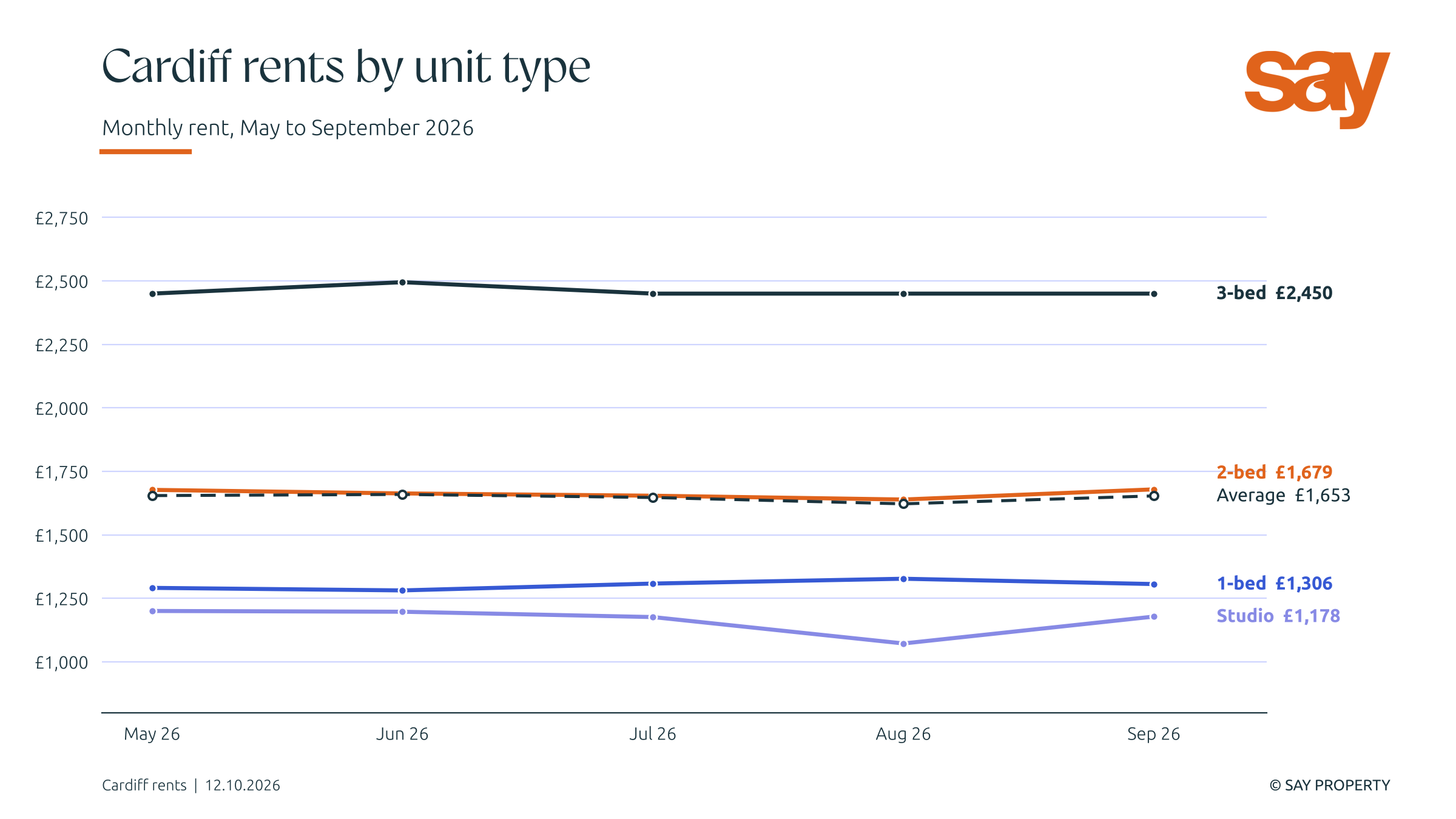
Cardiff's BTR market has continued to demonstrate a softer rental performance than London and Manchester, with average advertised rents remaining broadly unchanged since May, edging down from £1,654 pcm to £1,653 pcm in September (-0.1%). Despite some fluctuations over the period, there has been little evidence of sustained rental growth.
Studio rents have experienced the greatest volatility, falling from £1,200 in May to £1,072 in August before recovering to £1,178 in September (-1.8%). By contrast, 1-bed rents have demonstrated greater stability, increasing marginally by 1.2% (+£15) to £1,306 over the same period.
The 2-bed market has remained similarly subdued, with rents declining through the summer months before recovering slightly to £1,679 in September, broadly in line with May levels. Meanwhile, the 3-bed market has demonstrated limited movement, with rents remaining broadly stable throughout the period.
Overall, Cardiff continues to present a picture of rental stability rather than growth, contrasting with the upward momentum observed in London and Manchester. Whilst September saw some recovery across certain unit types, rents remain below the levels recorded at the start of the year. This suggests that operators may be facing greater constraints on rental growth, with pricing remaining relatively cautious across the market.
Looking Ahead
Our latest analysis highlights the varying performance of BTR rental markets across the UK. Whilst London and Manchester have demonstrated continued rental growth, albeit driven by different unit types, Cardiff has remained comparatively subdued. These differences reinforce the importance of understanding local market dynamics and adopting tailored pricing strategies rather than a uniform approach across markets.
As the rental market continues to adjust to regulatory change, access to granular, up-to-date rental data will become increasingly valuable. Understanding pricing trends at both scheme and unit level will be essential for operators and investors looking to optimise rental performance, inform rent reviews and maintain competitiveness.
At SAY, we continue to monitor rental movements across key UK markets, combining detailed benchmarking with local market insight to support informed pricing and investment decisions. If you would like to understand how these trends may impact your assets or wider portfolio, please get in touch with our team.